

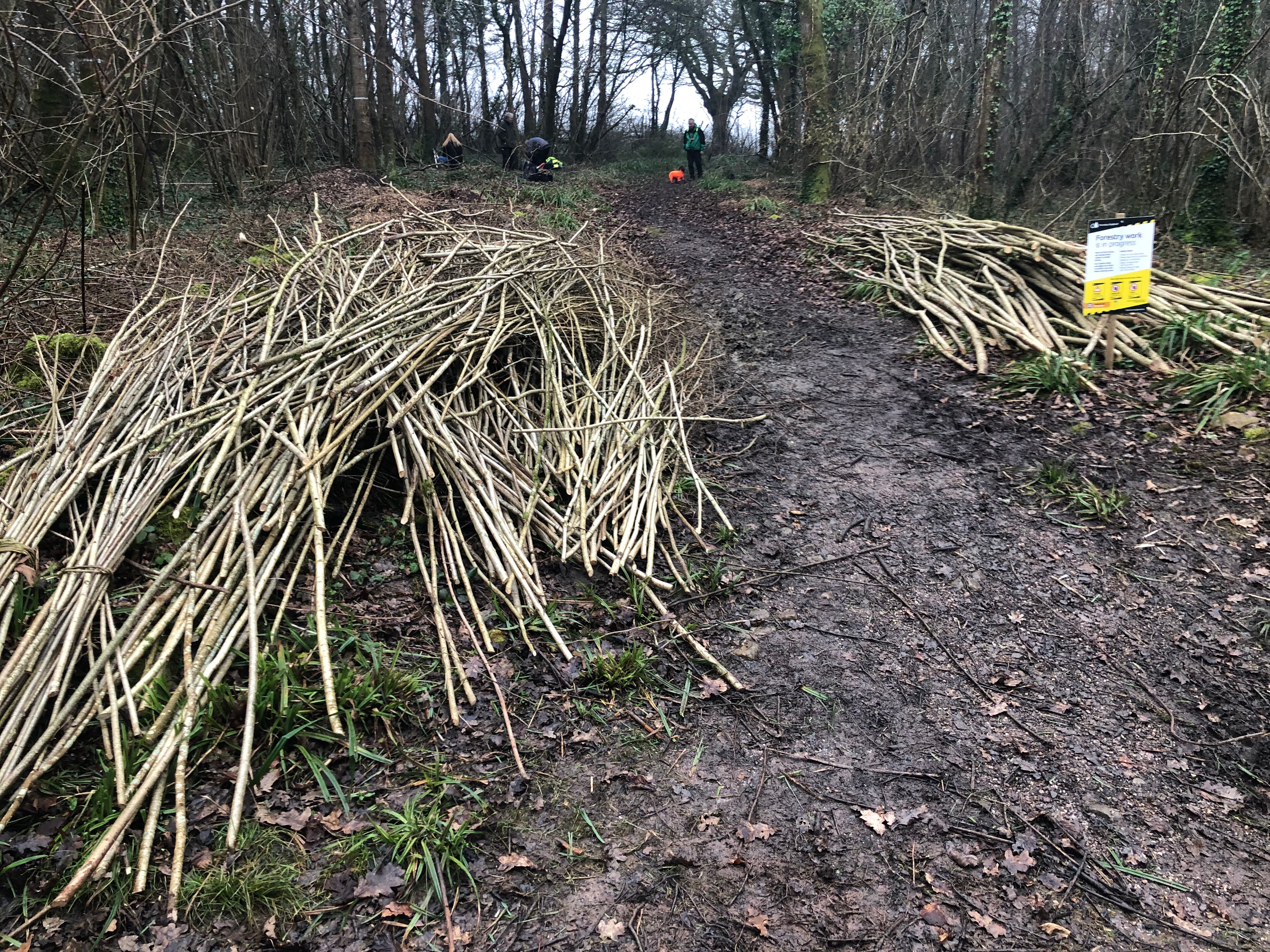
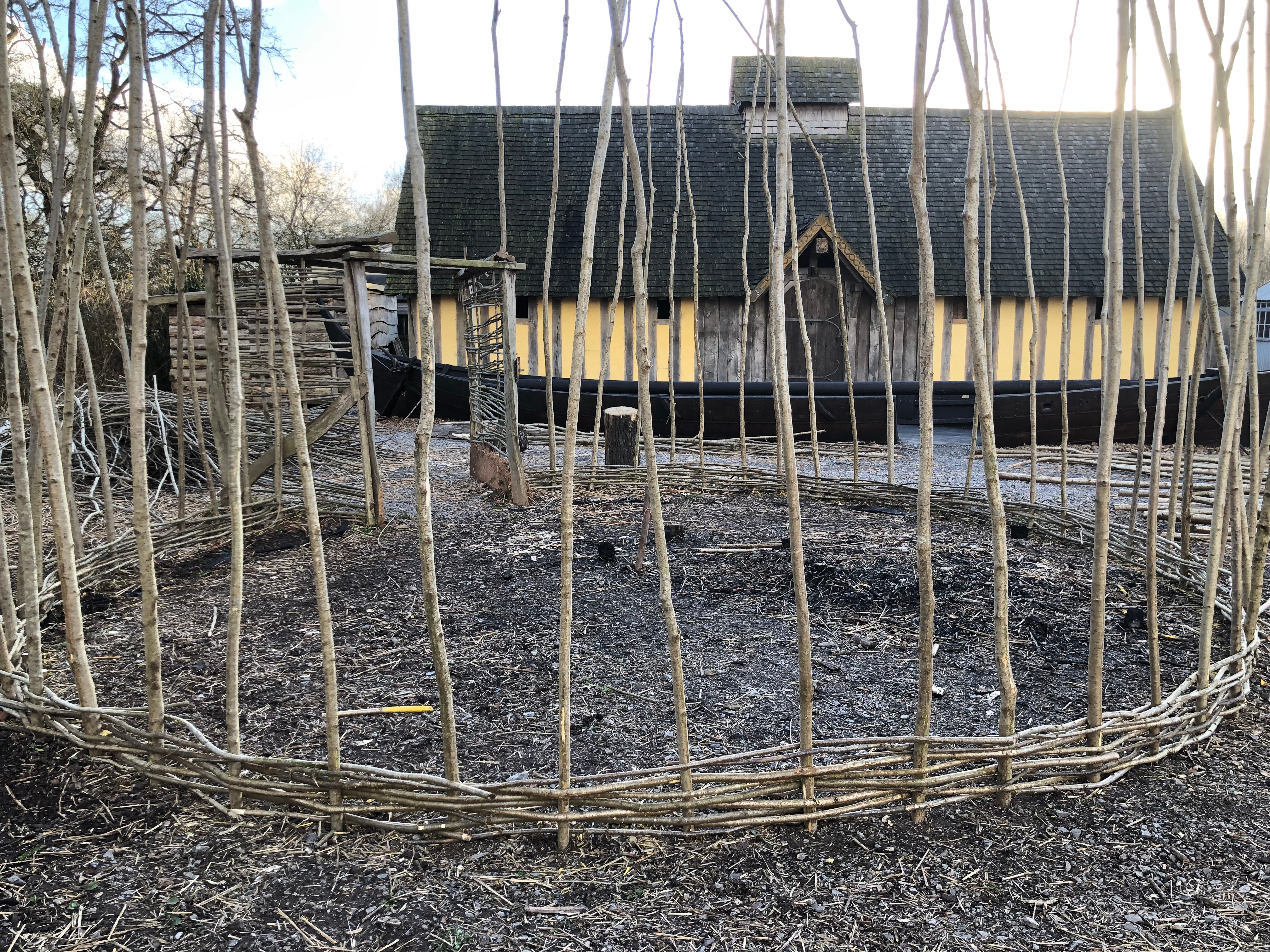
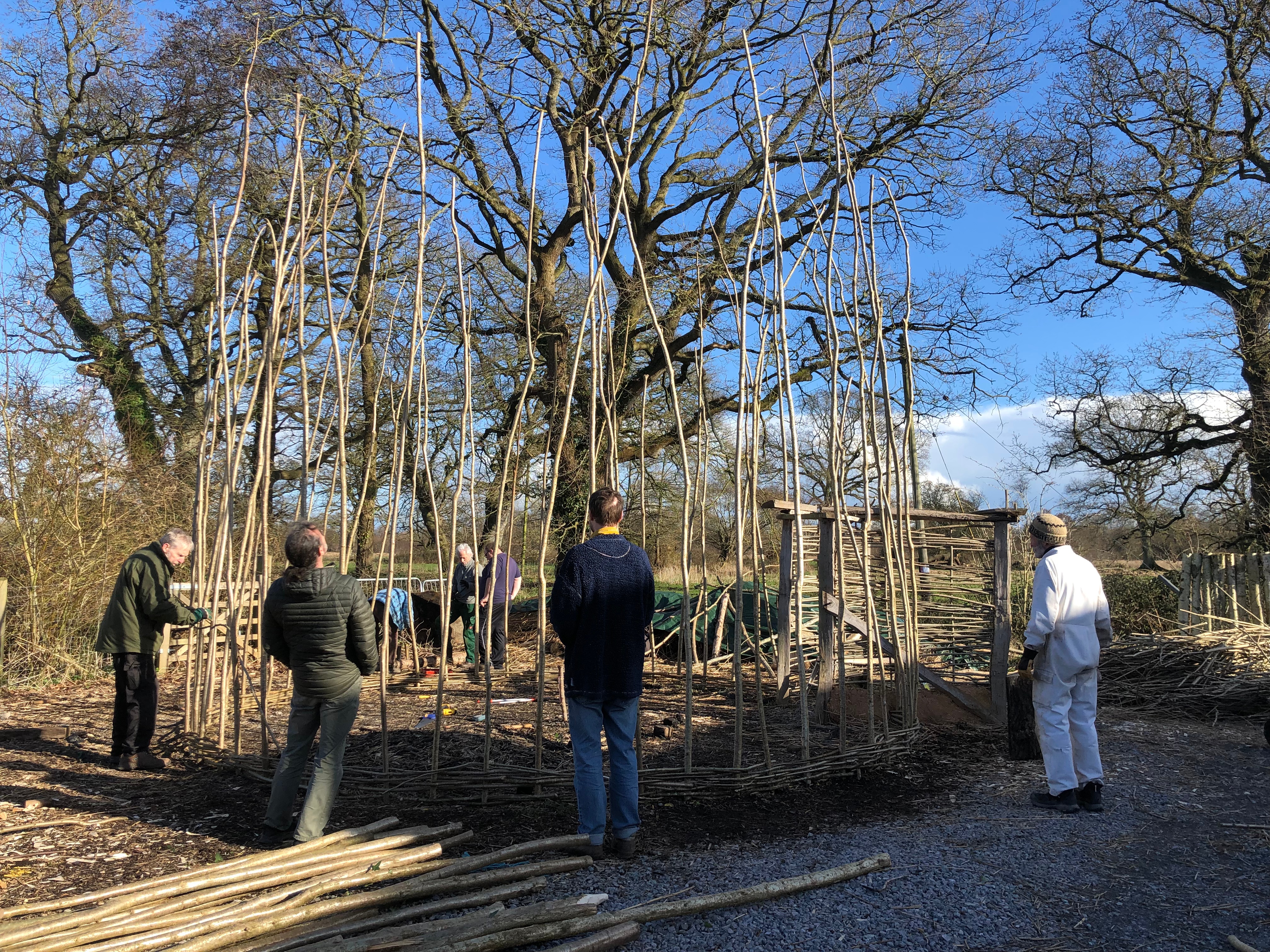
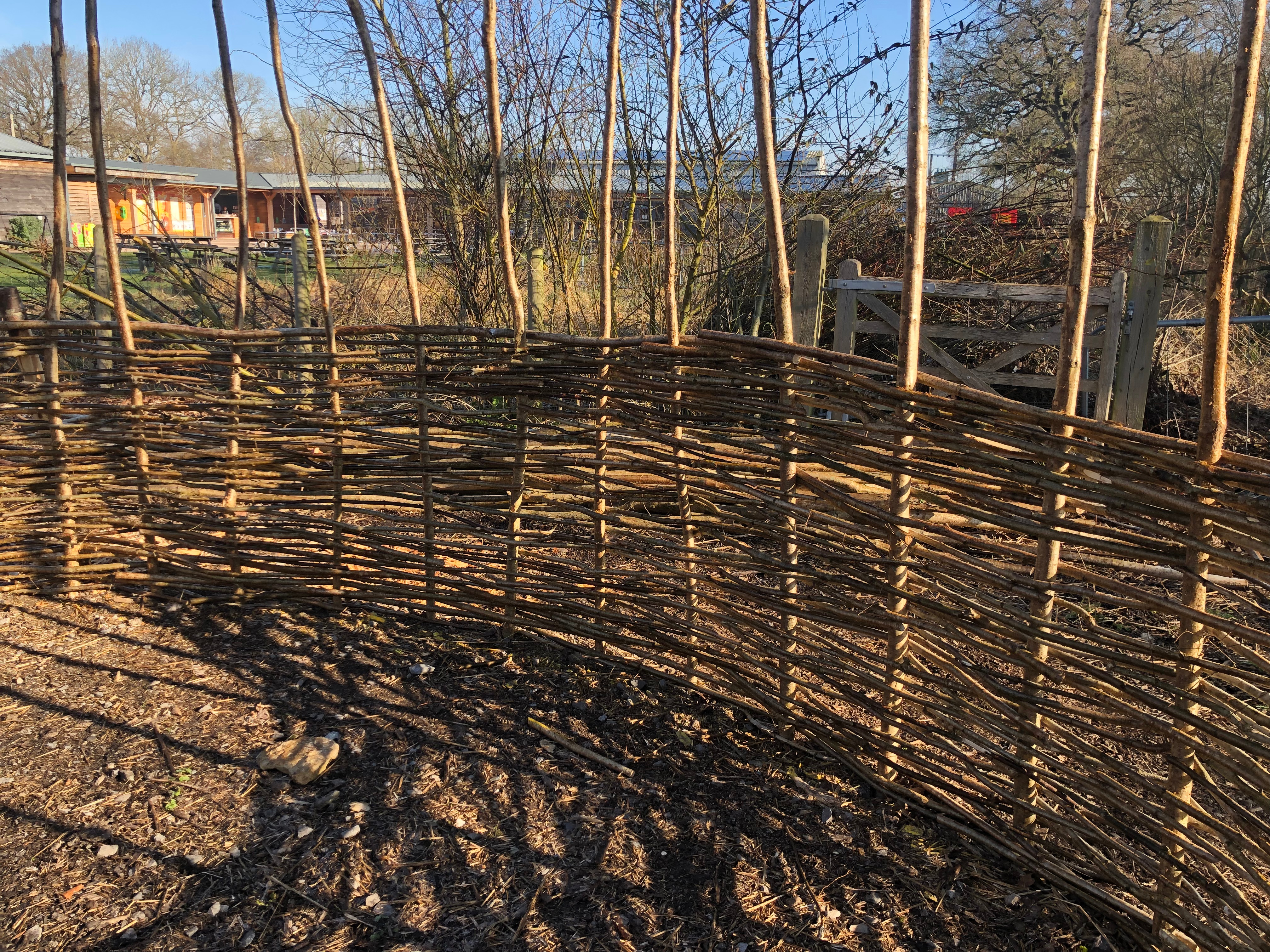
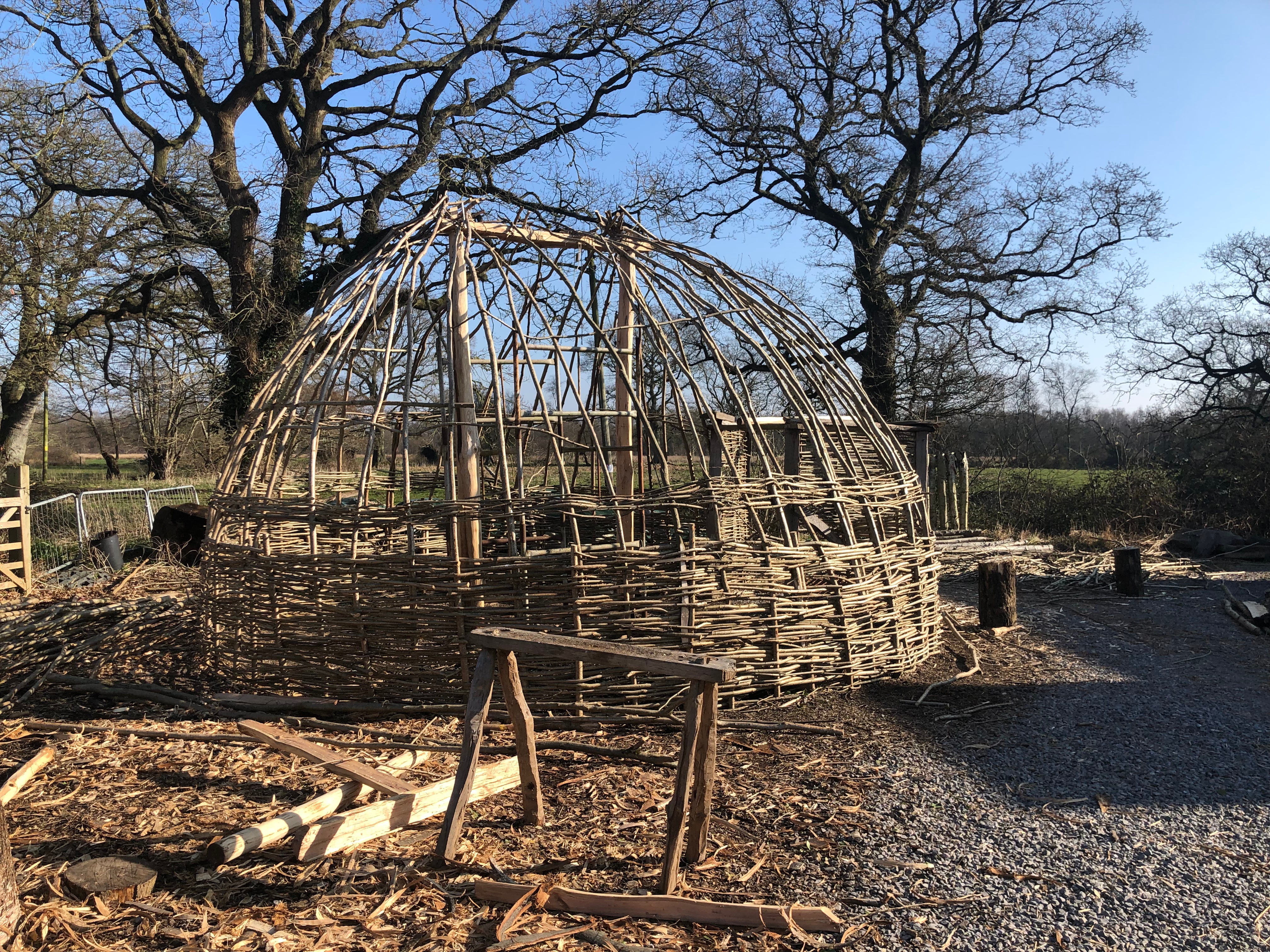
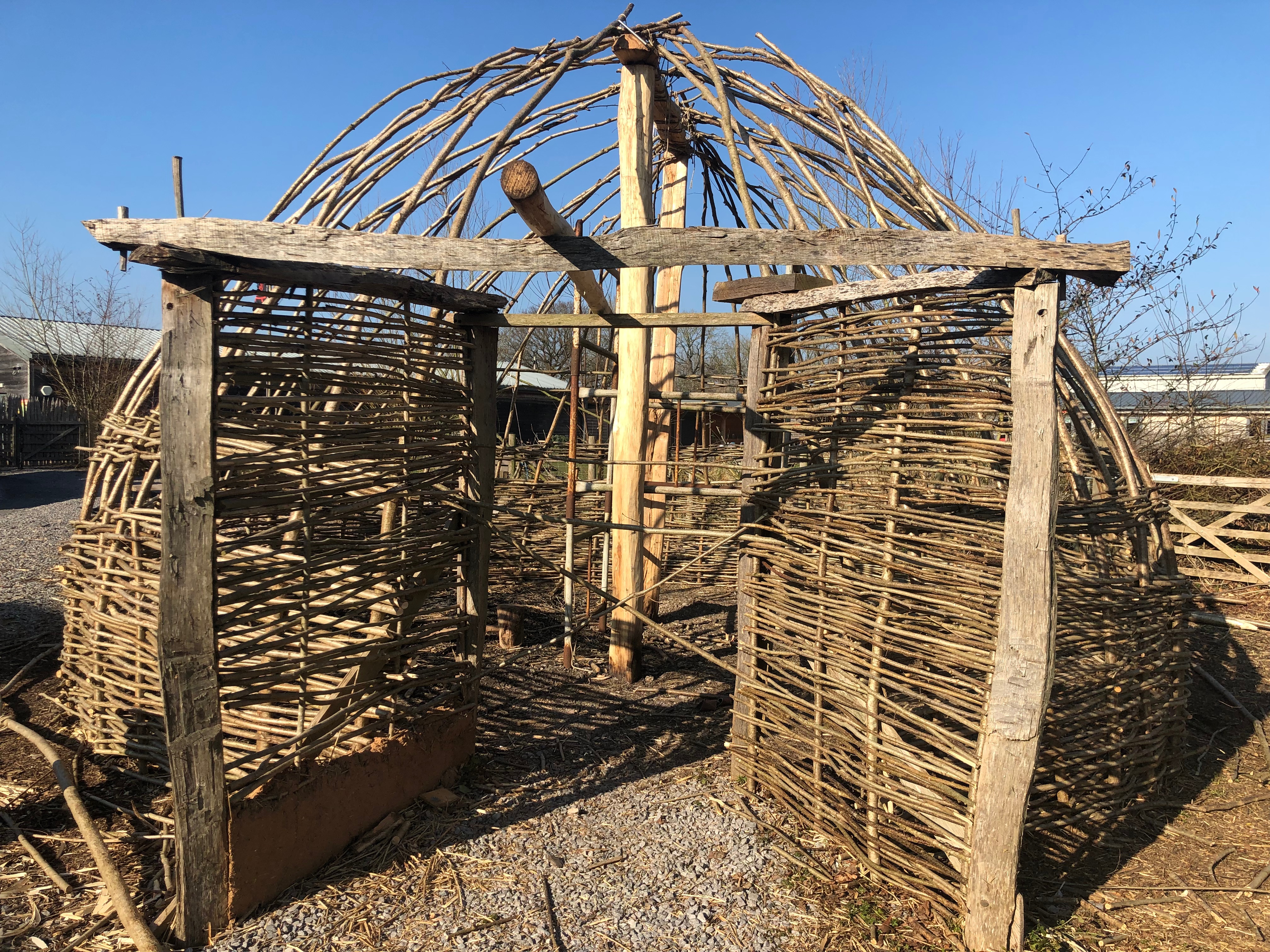
Work is speeding along with the mark II roundhouse experiment, trying to replicate as far as possible the type of construction used at Glastonbury Lake Village. Coppiced hazel provides the framework of the structure, reflecting the very small size of the wall posts that survived in the wet peat of the site. The walls are low, only 1m high, before the uprights are bent over to form the dome of the roof. Other roundhouse reconstructions use a wall plate design but all the firm archaeological evidence for prehistoric roundhouses ends at floor level or below, so everything above is in reality guesswork. The other novelty of the design is the short ridge line, partly based on some of the Glastonbury roundhouses which had posts either side of the hearth but also to show that you can have a ridge in a ’round’ roof.
 'Hands on Heritage' in the Avalon Marshes