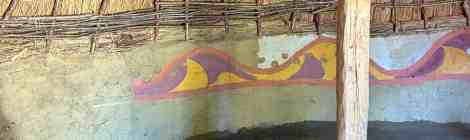
More experiments with clay
The daub walls of the roundhouse had several small cracks. In a 2m stretch, the cracks were filled with clay subsoil and smoothed over, creating a more visually appealing surface […]


The daub walls of the roundhouse had several small cracks. In a 2m stretch, the cracks were filled with clay subsoil and smoothed over, creating a more visually appealing surface […]

We are now using a different subsoil mix for the roundhouse daub. A bit sandier in composition, making it a lot easier to mix and apply than the previous clay […]
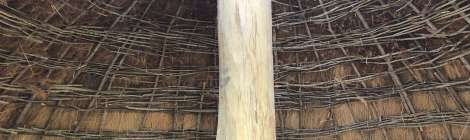
The reed thatch on the roundhouse is nearing completion. Rather thicker than they would probably have gone for in the Iron Age, as the whole building would only be expected […]
Work on the Iron Age roundhouse has continued with the walls and roof dome all now sufficiently woven with hazel. The short ridge line, coupled with the porch inset into […]
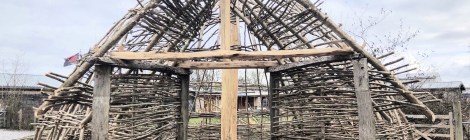
More progress on the roundhouse, weaving the dome of the roof and the roof of the porch.
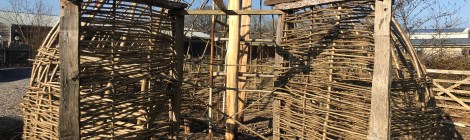
Work is speeding along with the mark II roundhouse experiment, trying to replicate as far as possible the type of construction used at Glastonbury Lake Village. Coppiced hazel provides the […]
This week another supply of pre-loved thatch allowed us to continue on the second layer of the Iron Age roundhouse. Kath has begun adding colour to her wonderful Oseberg ship […]
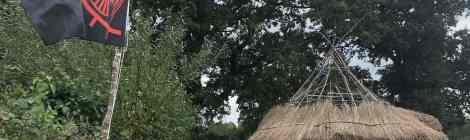
The last of the old stock of water reed has now been used up on the lowest eave level of the Iron Age roundhouse. Soon we will be able to […]

The roundhouse roof creeps higher, but as the diameter shrinks it becomes harder to weave. Several hundred bundles of reed from Ham Wall Natrure Reserve have been delivered for the […]
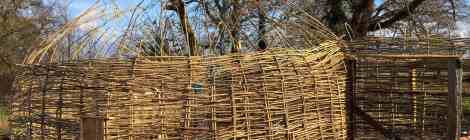
Work on the new roundhouse continues upwards with no break between the wall and the roof in this experimental design. Getting the angle right for the roof (55 degrees) is […]
 'Hands on Heritage' in the Avalon Marshes